
Menu
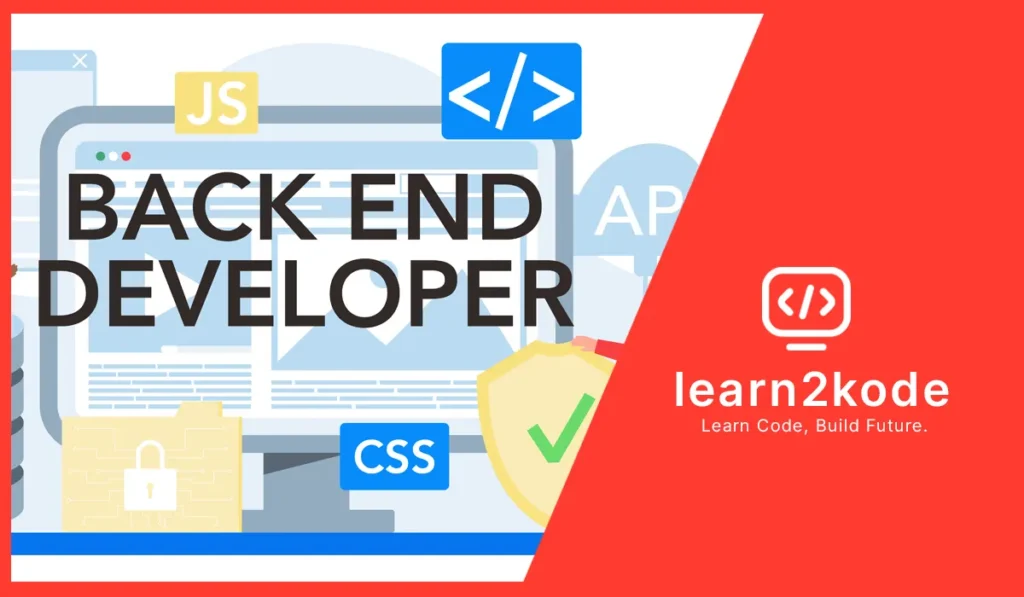
What Is Back End Web Development? A Complete Beginner’s Guide
There is a lot going on behind the scenes when you use a website, whether it is checking your account, making a payment, or viewing your customized dashboard. Back-end web development powers this invisible portion of the internet.
If front-end development determines what users see, back-end development determines how everything functions. The definition of back-end development, the technologies involved, its significance, and how novices might begin studying it are all covered in this tutorial.
What Is Back End Web Development?
The server-side of a website—the portion that consumers cannot see—is the focus of back-end web development. It entails overseeing the logic, databases, servers, APIs, user authentication, and other procedures necessary for a website to run efficiently.
- Back end = Brain of a website
- Front end = Face of a website
Backend developers write the code that:
- Stores and retrieves data
- Handles user login/signup
- Connects to databases
- Processes payments
- Ensures security
- Powers dynamic features
Why Is Back End Development Important?
Back end development is the backbone of any modern web application. It ensures:
- Fast and reliable performance
- Secure handling of user data
- Smooth communication between server and browser
- Scalable features
- Stable app functionality
Without a strong backend, even the most beautiful website cannot function properly.
What Does a Back End Developer Do?
Backend developers work on things users never directly see but rely on every second.
1. Build Server-Side Logic
The core functionality of the website — login systems, dashboards, shopping carts, search systems, etc.
2. Manage Databases
They store and retrieve data using:
- MySQL
- PostgreSQL
- MongoDB
- SQLite
3. Build and Integrate APIs
APIs allow the front end and backend to communicate.
4. Handle Authentication & Authorization
Login, signup, passwords, user roles, and secure access.
5. Optimize Server Performance
Ensuring fast response times.
6. Security & Data Protection
Encryption, validations, preventing attacks (SQL injection, XSS, etc.)
7. Deploy and Maintain Servers
Working with hosting, cloud platforms, and deployment tools.
Core Technologies in Back End Development
Backend development revolves around 3 main components:
1. Server-Side Programming Languages
These languages are used to write backend logic. Most popular options include:
- Node.js (JavaScript)
- PHP
- Python (Django, Flask)
- Java (Spring Boot)
- Ruby (Ruby on Rails)
- Go
- C# (ASP.NET)
Each language has its strengths, but all are capable of powering large applications.
2. Databases
Databases store the website’s data permanently.
SQL Databases
- MySQL
- PostgreSQL
- SQL Server
NoSQL Databases
- MongoDB
- Firebase
- Redis
3. Servers & Cloud Platforms
Back ends run on servers such as:
- Apache
- Nginx
- Node.js server
And cloud providers:
- AWS
- Google Cloud
- DigitalOcean
- Vercel
- Render
Popular Back End Frameworks
Frameworks make development faster and more efficient.
JavaScript/Node.js
- Express.js
- NestJS
PHP
- Laravel
- CodeIgniter
- Symfony
Python
- Django
- Flask
- FastAPI
Java
These tools help build complex, fast, modern websites efficiently.
- Spring Boot
Ruby
- Ruby on Rails
What Skills Does a Back End Developer Need?
A beginner backend developer should know:
- A server-side language (Node.js, PHP, Python, etc.)
- How to work with databases
- CRUD operations
- REST APIs
- Authentication basics
- Server hosting & environment variables
- Git & version control
Advanced developers also learn:
- Scalability
- Caching
- Message queues
- Microservices
- Cloud deployments
Career Opportunities in Back End Development
Backend developers are in high demand because every business needs scalable and secure servers. Job roles include:
- Backend Developer
- API Developer
- Node.js Developer
- Python Developer
- PHP/Laravel Developer
- Cloud Engineer
- Database Engineer
- Full Stack Developer (Front + Back End)
Backend roles usually offer high salaries, especially in companies handling large amounts of data.
How to Start Learning Back End Development
Here is a beginner-friendly roadmap:
Step 1: Pick One Language
(Recommended: Node.js or Python)
Step 2: Learn Server-Side Basics
Routing, request/response cycle.
Step 3: Learn Databases
Start with MySQL or MongoDB.
Step 4: Learn APIs
RESTful API building and testing (Postman).
Step 5: Build Real Projects
- Login & Signup System
- Blog API
- E-commerce backend
- URL shortener
- Admin dashboard backend
Step 6: Learn Deployment
Host your backend on:
- Render
- Railway
- AWS
- Vercel
Conclusion
Back end web development is the engine that powers websites and apps. It manages data, security, user interactions, and all behind-the-scenes processes that make digital platforms work. Whether you want a high-paying tech job or want to build powerful applications, learning backend development is a valuable and future-proof skill.

Why Python Is So Popular in 2026: Uses, Benefits, and Career Scope
January 7, 2026 | by admin

What Is PHP? How It Powers Dynamic Websites and Web Applications
January 5, 2026 | by admin

Go Programming Language Explained: A Beginner’s Guide to Golang
January 2, 2026 | by admin

What Is Ruby on Rails? A Beginner’s Guide to Modern Web Development
December 31, 2025 | by admin

What Is Node.js? A Complete Beginner’s Guide
December 30, 2025 | by admin